Upcycled Acapulco
Sustainably Crafted, Locally Woven Furniture

Stakeholders

Arquitectura Verde
Project Role

Designer
Tools Used

AutoCAD
Illustrator
Photoshop
Lightroom
Sketchup
Key contributions

Competitor Analysis
Material Analysis
Sustainability Analysis
Prototyping
Product Photography
The challenge
Find a sustainable way to reutilize construction steel rods to reduce the impact to construction waste in the environment
Sustainable &
Socially Responsible Design
The story
At the time the architecture firm I was working at had surplus steel rods from construction sites going to waste and we wanted to find a way to reuse them. Collaborating with local artisans, we created a furniture line that combined metalwork and weaving techniques to turn our waste into direct-to-consumer products.
The Results

Reduced Waste by 50%
of rods in AV construction sites

Used Recycled PVC Cords
for longevity and weather resistance

Empowered Local Artisans
by using traditional techniques
Define
Discovery base learning

Insight # 1
Simplicity, modular
To transform the rods on site would save on transportation and storage. There is access to machines on site that handle bending, welding and modular cuts.
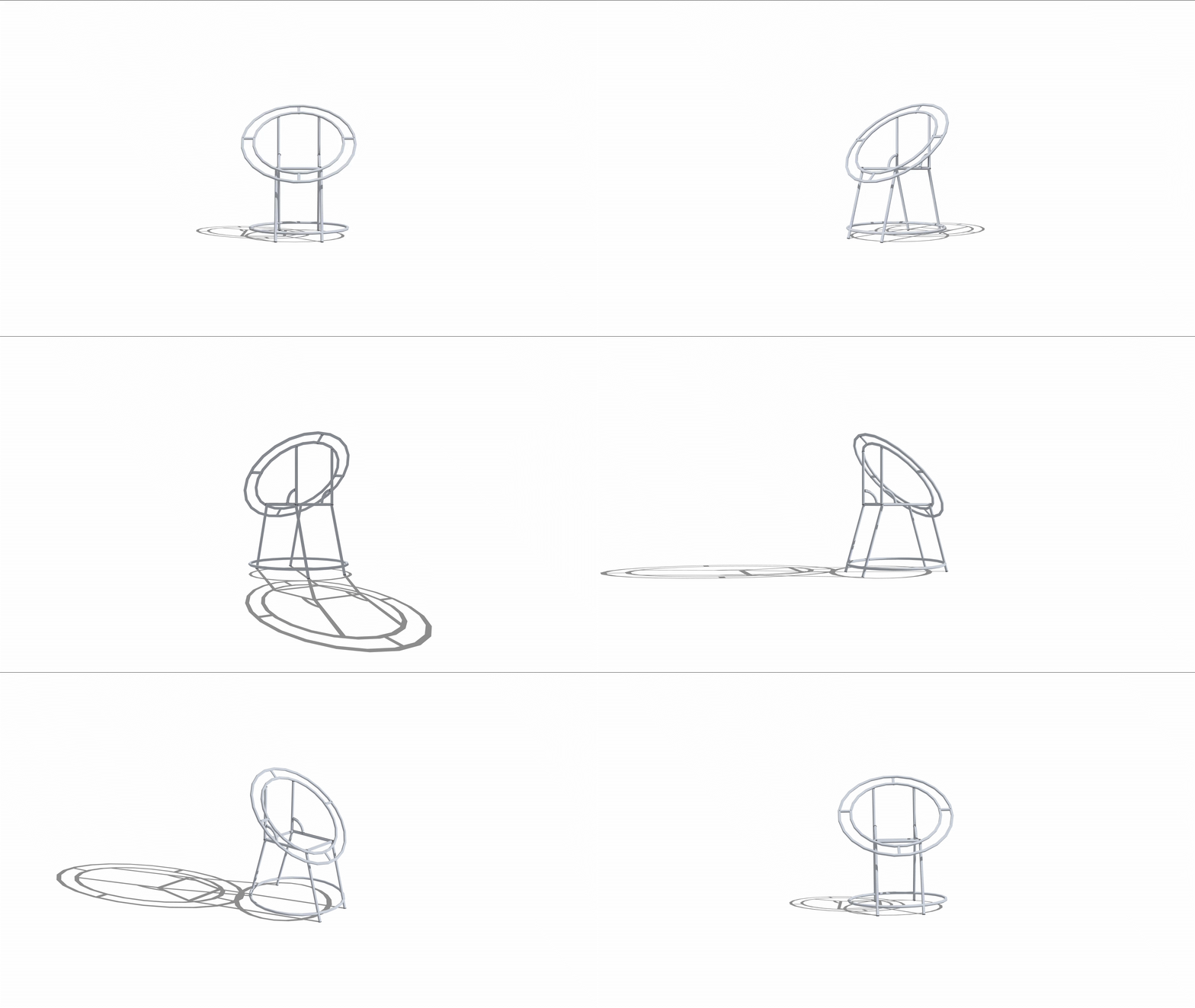
Idea: The product could be a Acapulco inspired chair with a simple frame and parts of similar size to facilitate transformation on site.
Insight # 2
Splitting the work
The finished chair cannot be fully completed on site, finishes like weaving need to be completed off site.
Idea: A network of makers could take on the last stage of production off site after training in PVC cord weaving. We could work with community organizers to locate weavers, and a shop space.
Insight # 3
Empower local makers
For training to be fast and effective the weaving patterns would have to use only two color blocks, checkered patterns and cord overlap to be simple.
Idea: The weaving pattern needs to be simple to make training short.
With some of the ideas I gather from makers, providers and stakeholders I started to creta sketches and advance the prototype